I still keep in mind the first time I viewed someone freeze in an emergency.
We were in a workplace kitchen area, a colleague began choking on a piece of apple, and three grownups just stared at each various other for a few secs that really felt much as well long. No person was disinterested. They were terrified of doing the wrong thing.
Fortunately, one person had done a current first aid and CPR course and stepped in rapidly. A couple of firm back strikes, the air passage cleared, and the case finished with unsteady laughter rather than a 000 phone call. What remained with me was not just exactly how reliable the intervention was, yet how ordinary the rescuer was: not a paramedic, not a nurse, just a person who had actually taken fast first aid training seriously.
That is the real pledge of fast first aid courses and express CPR training. They do not transform you into a clinician. They move you from panic to prepared in the moments that matter.
Why "fast" first aid is not a shortcut
When individuals listen to "fast first aid course" or "express first aid training", they frequently think of something watered down. A tick-the-box session where you see a video clip, authorize a form, and leave with a first aid certificate you will barely remember.
The fact, in well developed programs, is very different.
Fast first aid and CPR courses are about efficiency, not corner cutting. They concentrate on the handful of actions that make a disproportionate distinction in the first few mins of an emergency, and they press the non-essential information. Instead of long concept talks, you get targeted situations, muscular tissue memory technique, and decision making drills.
In my experience both as an instructor and as a person who has made use of these skills in actual occurrences, a great fast first aid course prioritises three things:
- Rapid acknowledgment of what is wrong: heart attack, choking, serious blood loss, anaphylaxis, reduced consciousness, warm illness. Simple, repeatable reactions: exactly how to start CPR, just how to make use of an AED, exactly how to stop bleeding, how to place a person who is unresponsive however breathing. Confidence under stress: damaging that doubt where individuals stress much more concerning slipping up than regarding doing something helpful.
Where longer first aid courses and innovative programs go deeper right into pathophysiology and variety situations, express first aid courses focus on the traditional emergencies that kill swiftly if nobody acts. That is exactly what most work environments, moms and dads, teachers and sports trainers need.
The initially three minutes: why rate matters
Most individuals ignore just how promptly a situation can deteriorate. They think of that if something severe happens, a rescue will arrive in time to repair it.
Response times vary Adelaide first aid by region, however also in city locations, you are commonly checking out 8 to 12 minutes prior to a team reaches you, occasionally much longer. In heart attack, each minute without CPR and defibrillation can lower survival possibilities by roughly 7 to 10 percent. By the time the experts get here, the result is heavily affected by what occurred in those very first couple of minutes.
The exact same pattern appears across other emergency situations:
Cardiac arrest: Chest compressions and early defibrillation hold the line until paramedics show up. Premium quality spectator CPR can double or triple survival chances.
Choking: A completely blocked respiratory tract is determined in secs and extremely few mins, not in quarter hours. Waiting on a rescue without attempting back strikes or stomach drives is essentially picking not to act.
Severe blood loss: Uncontrolled outside blood loss can cause shock in mins, specifically in children and smaller sized adults. Easy stress and elevation can keep someone to life enough time to reach hospital.
Anaphylaxis: An EpiPen or various other adrenaline vehicle injector made use of at the very first signs of a severe allergy is frequently the difference between a frightening episode and a deadly one.
Fast first aid training and express CPR courses concentrate relentlessly on this early window. They do not guarantee to change paramedics. They exist to develop a bridge between the minute a case happens and the moment educated clinicians can take over.
Why short, focused courses work for hectic people
Over the years, I have satisfied a lot of individuals who desired first aid and CPR training yet maintained putting it off. Their factors were foreseeable: no time at all, excessive content, fear it would all be forgotten. When fast first aid courses and express CPR courses ended up being more usual, that barrier dropped.
There are numerous advantages to short, well organized programs.
First, they in fact get done. A four hour express first aid course on a weekday night or Saturday early morning is reasonable for many grownups with jobs, family members, or shift job. A full two day first aid and CPR course often is not, unless the company mandates it and offers paid time off.
Second, individuals keep what they make use of. When training shifts from long lectures to short, practical drills, participants are far more most likely to keep in mind the core activities. I have seen individuals months after an express cpr course still able to talk through the steps comfortably and with unusual detail.
Third, fast certification refreshers remove the shame barrier. When your first aid certificate will end, it is less complicated to register for a fast CPR refresher course than to duplicate a long, comprehensive program. Numerous organisations currently use short annual first aid and CPR training classes, with periodic longer updates every couple of years.
There is additionally a mental advantage. Knowing that the commitment is limited makes people extra willing to involve completely and ask concerns. They are less likely to psychologically drift, which enhances finding out even in a compressed format.
What a solid fast first aid course should include
Not all fast first aid courses are equal. Some are just reduce variations of bigger programs, where content is eliminated without redesign. Others are built from scratch with clear concerns and clever use of time.
When you search for a fast first aid course near me or look for express first aid training alternatives, check for these core aspects:
- Practical CPR training on adult manikins, and ideally youngster and baby versions. Use of an AED, consisting of pad placement, turning it on, and following prompts. Primary survey skills: checking for risk, responsiveness, air passages, breathing and circulation. Management of choking in grownups and children. Basic blood loss control, including direct pressure and easy dressings.
Some companies likewise include brief modules on burns, fractures, seizures, bronchial asthma and anaphylaxis. Those are important, however they ought to not crowd out the fundamentals over. I would rather see a person absolutely positive in basic CPR and choking administration than vaguely accustomed to twenty different conditions.
For parents or instructors, express childcare first aid courses include another layer: child details scenarios, baby CPR, allergic emergency situations in child care setups, and head injuries from usual falls. In early years atmospheres where kids explore vigorously and commonly unexpectedly, that targeted web content addresses very actual risks.
The function of blended and express formats
In the last years, mixed discovering has transformed first aid training. Rather than investing a full day in a class, individuals complete theory modules online, after that go to a much shorter personally session concentrated on method. This approach fits fast first aid courses especially well.
Here is why combined or express first aid courses often outperform purely typical formats.
The online web content can be reviewed. People finish the concept components at their own rate, rewind difficult areas, and also examine them once again after the course surfaces. This aids with long-term retention.
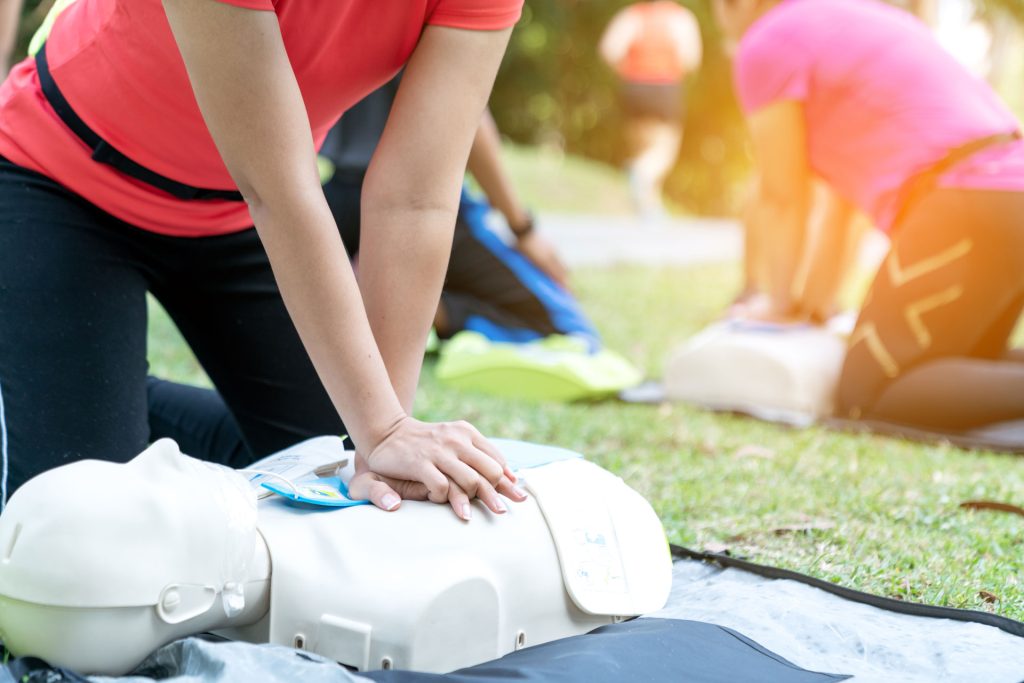
The in person time is spent on doing, not resting. When participants currently comprehend fundamental principles from the digital material, the face to face component can focus on abilities: compressions, rescue breaths, AED method, recuperation position, bandaging, EpiPen use, function plays.
The schedule ends up being flexible. Suppliers can use night express CPR courses or brief, concentrated first aid and CPR training classes that fit about active workdays. It additionally makes express child care first aid training much more accessible to educators who can not quickly leave their classrooms for full days.

An example is the fast CPR version currently usual in many organisations. Personnel finish a brief online CPR theory component, often 30 to 60 mins, then go to a 60 to 90 min practical session where they show skills and receive training. The result is a fast certification that still highlights quality.
When "fast" is not nearly enough on its own
Fast first aid and express CPR make good sense in lots of contexts, yet they are not the whole story.
Certain roles really require deeper first aid training and wider situation coverage. Remote location workers, exterior leaders, sporting activities instructors handling contact injuries, and high danger markets frequently require extended first aid courses or wilderness-oriented programs. These dive into longer term treatment, spinal preventative measures without instant rescue access, hypothermia and hyperthermia in real area conditions, and improvisation when standard supplies are scarce.
There is additionally a distinction between first understanding and ability proficiency. A single express cpr course will definitely boost your capacity to respond. Nonetheless, the finer factors of compression depth, recoil, rate and minimal disruption take repeating to install. This is why regular fast cpr refresher courses are so useful. Short, focused refresher courses substance in time, getting you closer to the efficiency levels that research studies connect with much better survival outcomes.
In some organisations, a layered design functions finest. A broad team of personnel complete a fast first aid course to cover the fundamentals, while a smaller sized group tackles more advanced training and works as designated very first aiders. That mix appreciates budget, time and danger administration at the same time.
The psychological side of very first aid
Technical abilities are just half the story. I have viewed qualified people falter not since they did not recognize what to do, but because they were afraid of the emotional weight.
Fast first aid training that disregards the psychological aspect does its pupils an injustice. On the other hand, the best first aid and CPR courses weave in state of mind, communication and self management.
Several motifs come up continuously in genuine emergencies.
Doing something is usually far better than not doing anything. Public fear concerning legal obligation or "making it even worse" keeps many spectators back. In most territories, good Samaritan securities and fundamental common sense make it extremely not likely that a reasonable effort to aid will result in difficulty. Fast first aid courses that review this openly complimentary individuals to act.
Calm is transmittable. You do not require to really feel tranquil to appear and act tranquility. Simple strategies like talking slowly, assigning tasks ("You, call 000", "You, get the first aid set"), and using the casualty's name makes a large distinction to every person at the scene.
Aftercare matters. Also when things go well, responding to a serious occurrence can leave you drunk. Excellent training explicitly urges debriefing, remainder, and, when needed, professional assistance. Companies should anticipate to support staff who have just done CPR on a coworker or handled a traumatic injury.
Fast courses have actually restricted time, but they can still normalise these facts. A couple of minutes invested going over genuine sensations, not simply textbook treatments, can be the distinction in between theory that breaks down under pressure and skills that stand up when a kid is transforming blue or a carbon monoxide employee has collapsed.
Choosing the ideal company and course
With the development of fast first aid courses and express CPR training, the variety of carriers has actually taken off. When you look for a fast first aid course near me you will certainly see whatever from lengthy established training organisations to tiny exclusive outfits that lease a space in a community center once a month.
A few functional checks assist different solid choices from weak ones.
Look for across the country recognised or approved training. In many nations, first aid and CPR certificates are standardised under a national framework. Make sure your first aid course or express cpr course results in an acknowledged first aid certificate, especially if you require it for job, child care, education or professional registration.
Check the instructor's background. An excellent facilitator does not have to be a paramedic, however genuine professional or frontline experience aids. Fitness instructors who can state, "In one event I participated in, this is exactly how it played out," have a tendency to supply even more grounded, sensible sessions.
Ask how much hands on method is consisted of. A fast first aid course constructed mainly around slides and video clips will certainly not serve you well. You ought to be touching manikins, exercising recovery positions, handling training vehicle injectors and bandages.
Review the equilibrium of online and personally material. Blended is fine, but if the one-on-one element is extremely short, you risk winning even more concept than usable skill. For CPR training particularly, you desire adequate time to repeatedly exercise compressions with feedback.
For child care employees, validate that the course is tailored. Express childcare first aid courses must deal with youngster and baby specific issues, not simply rebrand a generic adult course.
What to do after your fast first aid course
One of the most common remorses people show to me after a case is, "I did the training, but I had actually not thought of how it would certainly work below." They passed their first aid and CPR course, after that submitted the certificate away and never connected the dots to their real environment.
The days right away after your fast first aid course are the ideal time to secure what you learned.
An easy blog post training checklist can keep your abilities to life:
- Walk through your home, office, sports club or childcare setup and recognize first aid packages, AED locations and likely hazards. Share key points with someone else, also for ten minutes. Teaching, or a minimum of explaining, strengthens your own memory. Program regional emergency numbers and essential get in touches with into your phone if they are not already there. Schedule your following fast cpr refresher course or first aid refresher right into your calendar so it does not approach on you. If you remain in a leadership role, integrate easy first aid drills right into team meetings or safety instructions a couple of times a year.
Some individuals also such as to maintain a short recap card in their budget or phone, noting CPR actions, choking treatment, and anaphylaxis administration. It is not a substitute for training, yet it supports recall under stress.
The silent worth of regular preparedness
First aid is not attractive. There is no social networks badge for having actually completed fast first aid courses or express first aid training. Yet in dilemma moments, regular individuals with standard abilities usually identify whether someone lives long enough for sophisticated care.

I have seen parents calmly start compressions on their own teenager while waiting on a rescue. I have viewed an educator in a child care center make use of an EpiPen on a kid going into anaphylactic shock with a calmness that would certainly impress any kind of medical professional. I have actually seen bystanders at a park organise themselves around a heart attack before paramedics showed up, simply since among them had actually done a recent fast CPR course and bore in mind the key steps.
In every case, the people involved defined themselves prior to the event as "not clinical", "not truly positive", or "just a mother/ simply a train". What altered their practices in the moment was not a deep study anatomy, but the memory of one clear, succinct first aid and CPR course that had pierced the essentials.
That is what fast first aid offers: not excellence, but sufficient. Sufficient understanding to recognise difficulty early. Enough technique to move your hands also while your heart is competing. Sufficient confidence to override the urge to stand back and await somebody "extra certified".
Emergencies do not make appointments. They get here in kitchens, play grounds, workplaces, gyms, and car parks, sometimes that disregard your timetable and your comfort level. When that happens, you do not increase to first aid training in Launceston the level of your ideal intents. You are up to the level of your training.
A few hours spent in a well run fast first aid course or express CPR course is a modest investment for that sort of safeguard. For your colleagues, your family, your community, and, quite possibly one day, for you.